Understanding the Importance of a Conflict Resolution Framework
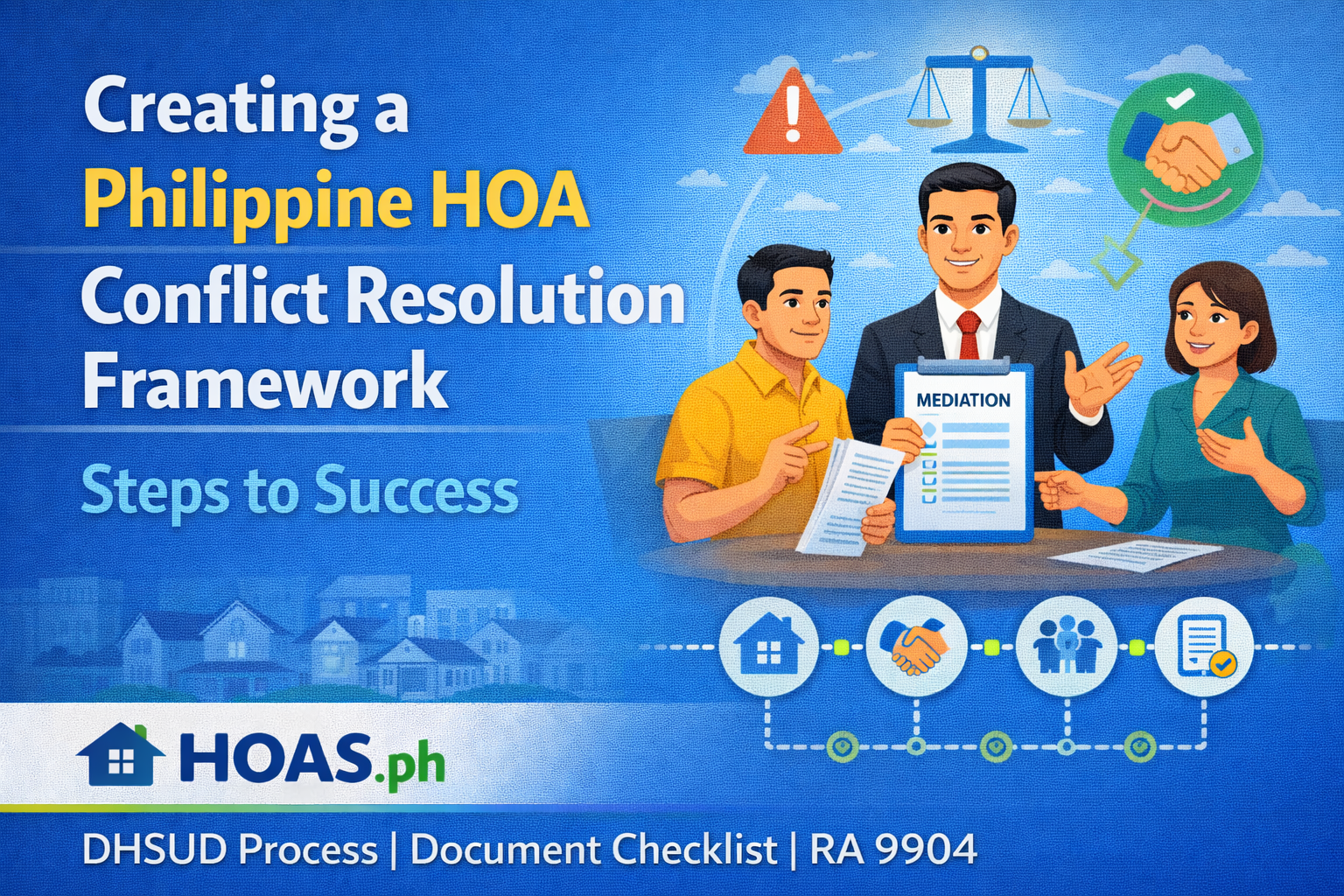
Creating a Philippine HOA conflict resolution framework is essential for fostering a peaceful community environment. Homeowners associations (HOAs) play a crucial role in managing neighborhood relations and ensuring compliance with regulations set by the Department of Human Settlements and Urban Development (DHSUD). A well-defined conflict resolution process helps address disputes efficiently, thereby maintaining harmony among members.
Step 1: Familiarize Yourself with Relevant Laws
To establish an effective framework, it is vital to understand the legal context. The Republic Act 9904, known as the Magna Carta for Homeowners and Homeowners Associations, provides guidelines on governance and conflict resolution. According to this law, HOAs must ensure that homeowners have the right to appeal decisions and receive due process.
Key Legal Considerations
- HOAs must be registered with DHSUD and obtain a Certificate of Registration.
- All homeowners in the subdivision automatically become members.
- Association dues must be reasonable and approved by a majority vote.
Step 2: Establish Clear Bylaws
Bylaws serve as the operational manual for your HOA, outlining procedures for conflict resolution. Ensure that your bylaws include specific sections on how disputes will be managed. For instance, you could outline a three-step process: mediation, arbitration, and final resolution.
Example of a Conflict Resolution Process
- Mediation: A neutral third party facilitates discussions between conflicting parties.
- Arbitration: If mediation fails, a designated board member or committee makes a binding decision.
- Final Resolution: Document the outcome and communicate it to all parties involved.
Step 3: Empower Your Board of Directors
The HOA Board of Directors plays a vital role in conflict resolution. Members should be trained in mediation techniques and the legal aspects of conflict management. Regular training can equip them with the skills needed to handle disputes fairly and effectively.
Step 4: Encourage Open Communication
Open lines of communication can prevent conflicts from escalating. Utilize announcement and communication tools in your HOA Management System to keep homeowners informed about policies and procedures. This can help clarify misunderstandings before they lead to disputes.
Step 5: Implement a Concern/Complaint Management System
Establishing a formalized complaint management system can streamline the resolution process. Homeowners should feel comfortable submitting concerns, and these should be documented and addressed promptly. A dedicated concern management feature in an HOA Management System can help track issues and resolutions.
Step 6: Foster a Culture of Respect and Collaboration
Encouraging a culture of respect and collaboration among members is crucial. Regular community-building activities can provide opportunities for homeowners to interact positively, reducing the likelihood of disputes arising. For instance, organize neighborhood clean-up days or community potlucks.
Step 7: Streamlining with Modern Tools
In today's digital age, leveraging technology can significantly enhance your HOA's conflict resolution framework. An HOA Management System offers features such as automated billing, online payment processing, and financial reporting, which can minimize financial disputes. Additionally, a mobile-friendly dashboard allows for easy access to important documents, fostering transparency among members.
Conclusion
Creating a robust conflict resolution framework is essential for maintaining peace and order within your community. By adhering to DHSUD guidelines, establishing clear bylaws, and fostering open communication, your HOA can effectively manage disputes. Consider utilizing an HOA Management System to streamline this process and enhance community governance. Start your free 14-day trial today and see how it can benefit your community.