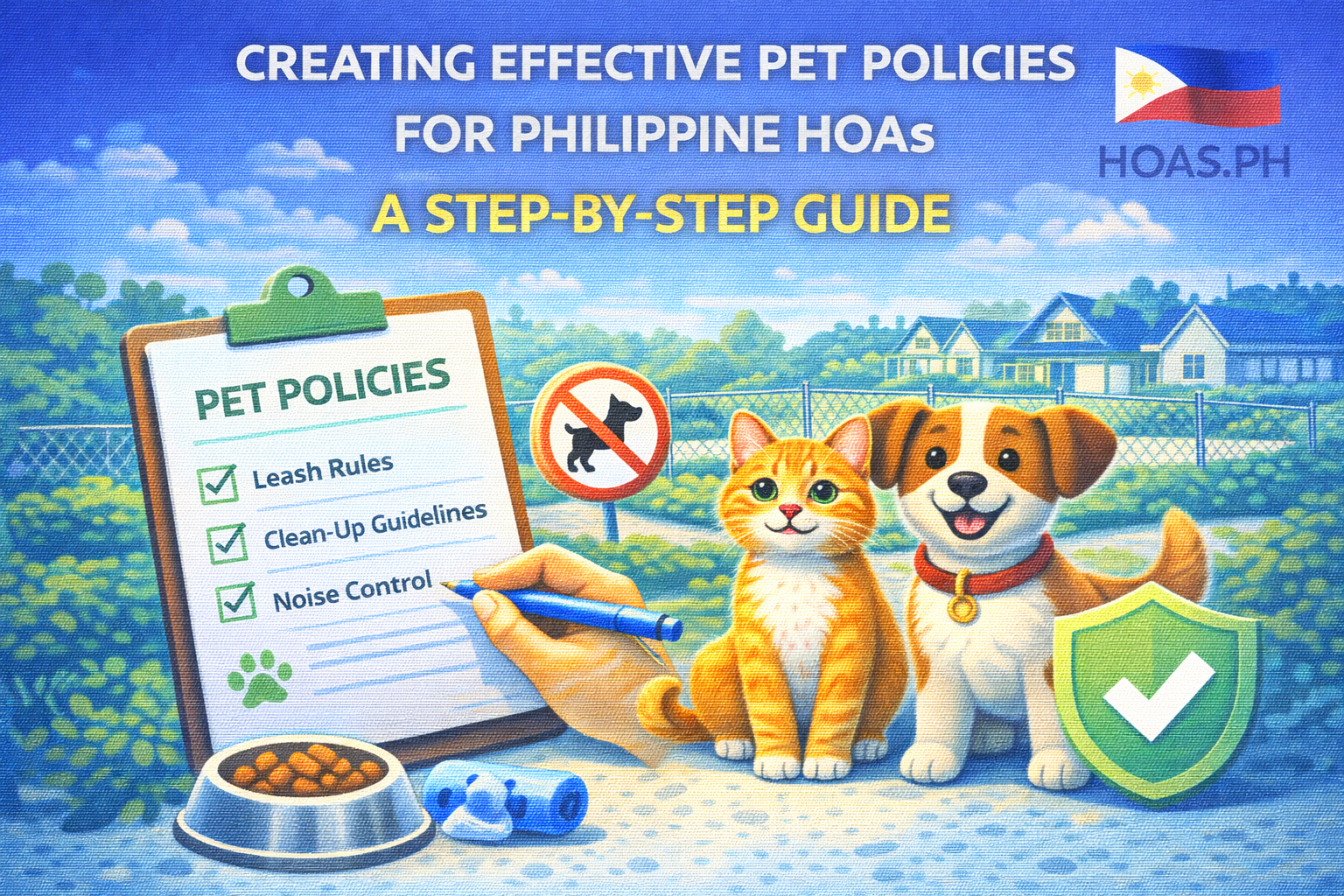
Creating Effective Pet Policies for Philippine HOAs: A Step-by-Step Guide
As more Filipino homeowners embrace pet ownership, it's essential for homeowners associations (HOAs) to establish clear pet policies. These policies not only promote community harmony but also ensure compliance with DHSUD guidelines. This guide will help you create effective pet policies tailored for your HOA.
Why Pet Policies Matter for HOAs
Pet policies are crucial for maintaining a peaceful community. They help address potential conflicts arising from pet behavior, noise, and cleanliness. By having clear guidelines, HOAs can protect homeowners' rights and foster a respectful living environment. According to Republic Act 9904, HOAs have the authority to implement rules that promote the welfare of residents, making pet policies a vital aspect of community governance.
Step 1: Assess Community Needs
Before drafting a pet policy, assess the specific needs and concerns of your community. Engage with homeowners to understand their perspectives on pet ownership. Consider factors like:
- Types of pets commonly owned
- Common complaints related to pets
- Available amenities for pets, such as parks or walking areas
For example, in a subdivision in Quezon City, homeowners expressed concerns about noise from barking dogs, prompting the HOA to implement quiet hours for pet owners.
Step 2: Define Pet Ownership Rules
Clearly outline what types of pets are allowed and any restrictions. Consider including the following:
- Breed restrictions for dogs
- Size limitations for pets
- Requirements for vaccinations and licenses
Ensure that these rules align with DHSUD guidelines and are approved by a majority vote during HOA meetings.
Step 3: Establish Care and Control Guidelines
Pet owners must take responsibility for their pets. Include guidelines that cover:
- Leashing pets in common areas
- Picking up after pets
- Noise control measures
For instance, in a community in Cebu, the HOA introduced a mandatory leash policy in shared spaces, significantly reducing incidents of pets running loose.
Step 4: Create a Rule Enforcement System
Establish a system for reporting and addressing violations of the pet policy. This could include:
- A concern/complaint management system for residents to report issues
- Clear consequences for rule violations, such as fines or restrictions
Utilizing an HOA Management System can streamline this process, allowing for efficient tracking and resolution of complaints.
Step 5: Communicate Policies Effectively
Once the pet policy is finalized, communicate it clearly to all homeowners. Use multiple channels, such as:
- Community meetings
- Newsletters
- Online platforms
Ensuring that everyone is aware of the policies promotes compliance and reduces misunderstandings.
Step 6: Review and Revise Regularly
Pet policies should not be static. Regularly review and revise them based on community feedback and changing circumstances. Schedule annual reviews during HOA meetings to discuss any necessary adjustments. This proactive approach ensures that the policies remain relevant and effective.
Streamlining with Modern Tools
In today's digital age, utilizing an HOA Management System can greatly ease the burden of managing pet policies. Features such as:
- Document management for storing policy documents
- Automated announcements to keep residents informed
- Online payment processing for any fines associated with non-compliance
These tools not only enhance communication but also improve overall governance of your HOA, ensuring that pet policies are enforced fairly.
Conclusion
Creating effective pet policies is essential for maintaining harmony in Filipino communities. By following these steps, your HOA can ensure a respectful living environment for all residents. Embracing modern tools like an HOA Management System can simplify the implementation and management of these policies. Start your free 14-day trial today and see how it can help your community thrive.