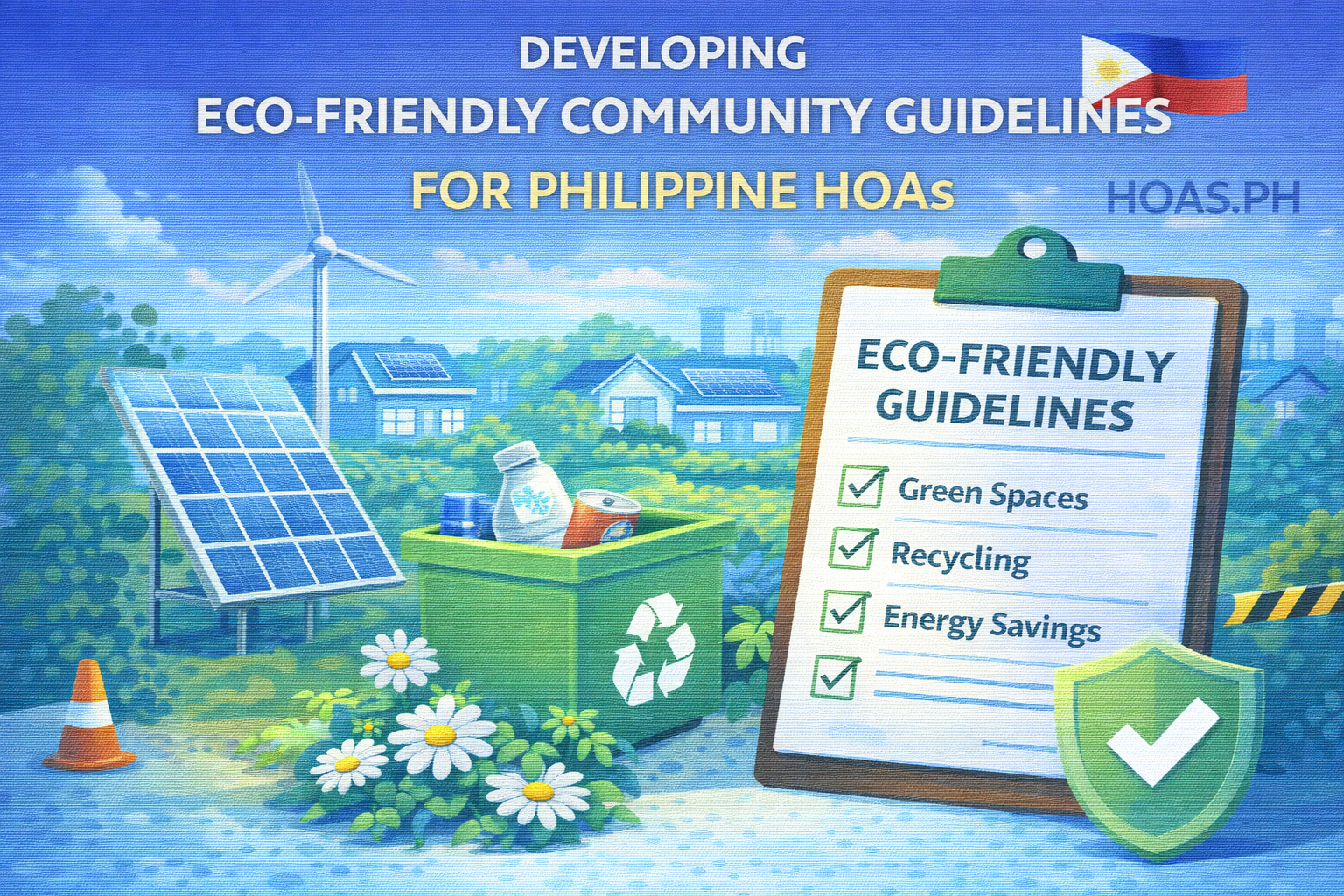
Why Develop Eco-Friendly Community Guidelines for Philippine HOAs?
As concerns about climate change and environmental sustainability grow, Filipino homeowners are increasingly seeking ways to live in harmony with nature. Developing eco-friendly community guidelines for homeowners associations (HOAs) is crucial for fostering a sustainable living environment. These guidelines not only promote environmental stewardship but also align with the regulations set forth by the DHSUD (Department of Human Settlements and Urban Development). By implementing such measures, HOAs can enhance community well-being and property values.
Understanding the Legal Framework
Before crafting eco-friendly guidelines, it is essential to understand the legal framework surrounding HOAs in the Philippines. Under Republic Act 9904, which serves as the Magna Carta for Homeowners and Homeowners Associations, HOAs must register with the DHSUD and obtain a Certificate of Registration. This legal backing provides HOAs with the authority to implement rules that promote sustainability.
For instance, HOAs can implement waste segregation systems and collect recyclable materials, which can then be sold to recycling companies. This practice not only encourages responsible waste management but also generates additional funds for the community.
Key Components of Eco-Friendly Guidelines
When developing eco-friendly community guidelines, consider incorporating the following key components:
- Waste Management: Implement strict waste segregation and composting practices.
- Water Conservation: Encourage homeowners to use water-efficient appliances and rainwater harvesting systems.
- Energy Efficiency: Advocate for the use of energy-efficient lighting and appliances within homes.
- Green Spaces: Promote the planting of trees and the creation of community gardens.
- Sustainable Transportation: Encourage the use of bicycles and public transport.
Involving Homeowners in the Process
It's vital to involve community members in the development of these guidelines. Organizing workshops and meetings can provide homeowners with the opportunity to voice their opinions and contribute ideas. According to the DHSUD, regular meetings should be held at least once a year, which can serve as an excellent platform for discussing eco-friendly initiatives.
For example, the Green Hills Village in San Juan City formed a committee to draft their environmental policies, resulting in community-wide support and participation in sustainability programs.
Monitoring and Enforcement
To ensure that the eco-friendly guidelines are followed, HOAs must establish a monitoring and enforcement system. This could involve regular assessments of compliance and the use of a concern/complaint management system to address violations. Homeowners should be made aware of their rights and responsibilities, which are outlined under the DHSUD regulations.
For instance, the Pasig City HOA conducts quarterly evaluations of community compliance with their environmental policies, resulting in improved adherence among residents.
Streamlining with Modern Tools
Using modern technology can significantly ease the management of eco-friendly initiatives. An HOAs Management System can facilitate automated billing for environmental fees, track compliance with guidelines, and manage communication among homeowners regarding sustainability efforts. Features such as online payment processing and document management allow for seamless operations, ensuring that residents stay informed and engaged.
Moreover, a mobile-friendly dashboard allows homeowners to easily access important announcements and updates related to community sustainability initiatives.
Educating the Community
Education is key to the success of any eco-friendly initiative. HOAs should organize educational campaigns to inform residents about the benefits of sustainable living. Workshops, webinars, and newsletters can be effective tools in spreading awareness. This approach not only fosters community spirit but also encourages individual homeowners to take action.
For example, the Green Living Workshop organized by a local HOA in Quezon City successfully educated residents on composting and energy conservation techniques, leading to a significant reduction in waste generation.
Conclusion
Developing eco-friendly community guidelines for Philippine HOAs is more than just a trend; it’s a necessity for sustainable living. By adhering to DHSUD regulations and fostering community involvement, HOAs can create a robust framework that promotes environmental sustainability. Utilizing modern tools, such as an HOAs Management System, can streamline the implementation of these guidelines and enhance community engagement.
As you embark on this journey towards a greener community, consider implementing these actionable steps. To ease the transition, you can explore how an HOAs Management System can support your community. Start your free 14-day trial today and take the first step towards an eco-friendly future!