Understanding the Importance of Disaster Preparedness for HOAs
Disaster preparedness plans are critical for homeowners associations (HOAs) in the Philippines, especially given the country's vulnerability to natural disasters such as typhoons, earthquakes, and floods. These plans not only safeguard properties but also enhance community resilience. By implementing effective strategies, HOAs can protect their members and ensure a swift recovery after disasters.
Legal Framework for Disaster Preparedness in HOAs
The legal framework surrounding HOAs is governed by the Republic Act 9904, known as the Magna Carta for Homeowners and Homeowners Associations. This law mandates that HOAs must register with the DHSUD (Department of Human Settlements and Urban Development) and obtain a Certificate of Registration. Furthermore, under this law, HOAs are empowered to create rules that include disaster preparedness strategies.
Key Responsibilities of HOAs
According to DHSUD guidelines, HOAs have specific responsibilities that are crucial during emergencies. These include:
- Maintaining common areas that serve as emergency shelters.
- Implementing rules and regulations regarding safety and disaster response.
- Coordinating with local government units (LGUs) for disaster response.
Creating a Comprehensive Disaster Preparedness Plan
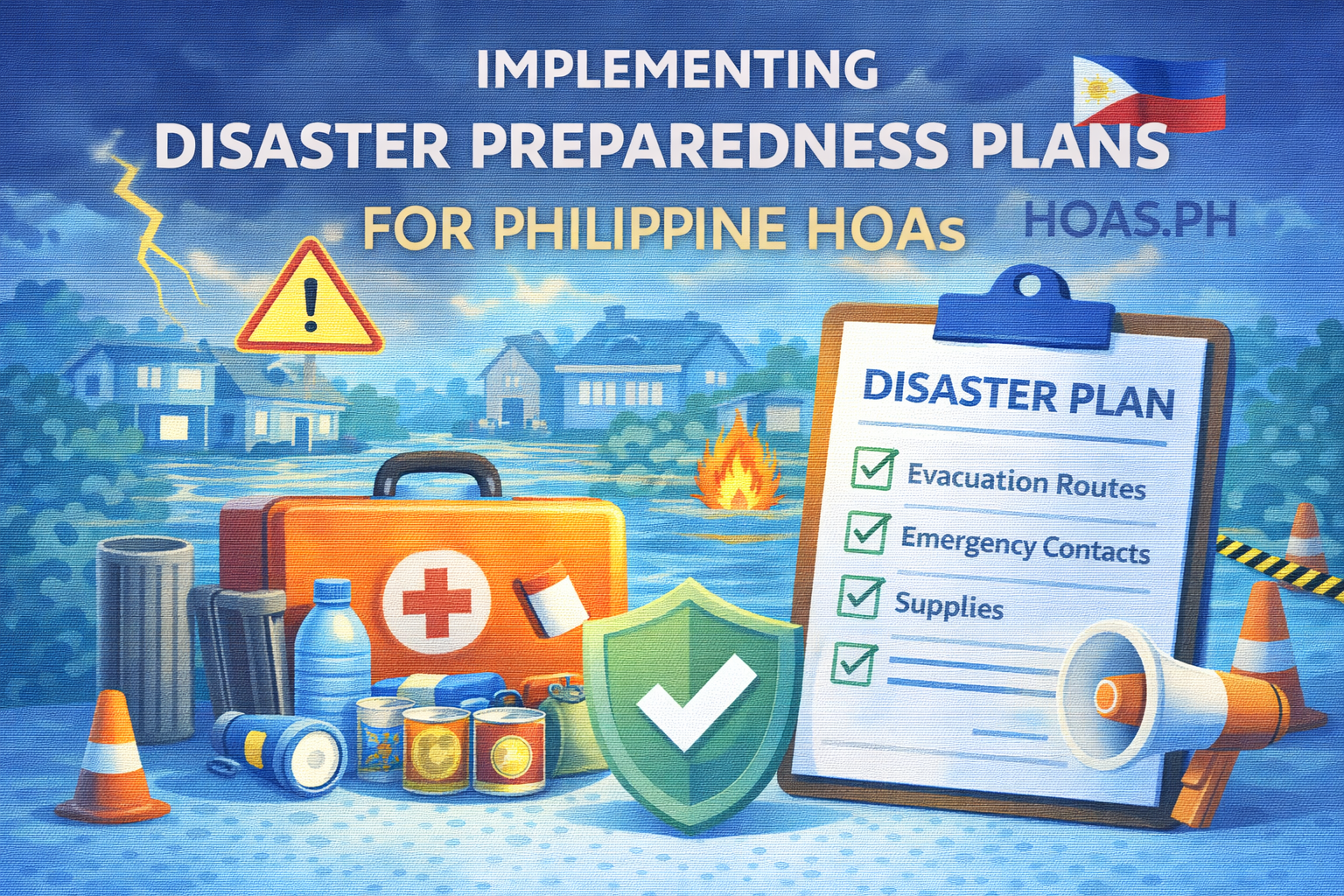
A comprehensive disaster preparedness plan should include several key components. Here’s a step-by-step guide to help HOAs formulate an effective plan:
- Risk Assessment: Identify potential hazards specific to your community, such as flooding or landslides.
- Emergency Contacts: Compile a list of emergency contacts, including local authorities and emergency services.
- Evacuation Routes: Establish clear evacuation routes and inform all residents.
- Communication Plan: Develop a communication strategy to alert residents during emergencies. Consider using announcement tools available in HOA management systems.
- Drills and Training: Conduct regular disaster drills to ensure residents know how to respond.
Engaging the Community in Preparedness Efforts
Engaging homeowners in disaster preparedness not only enhances safety but also fosters a sense of community. Here are some practical ways to involve residents:
- Organize workshops on first aid and emergency response.
- Encourage participation in local disaster preparedness programs.
- Set up a volunteer group to assist during emergencies.
Streamlining with Modern Tools
Modern tools can significantly enhance the effectiveness of disaster preparedness plans. An HOAs Management System can streamline communication and organization through features such as:
- Document Management: Store emergency plans and community contacts in one accessible location.
- Concern/Complaint Management System: Allow residents to report issues and suggestions related to safety.
- Online Payment Processing: Facilitate dues collection for funding emergency preparedness initiatives.
Financial Management for Disaster Preparedness
Financial planning is vital for implementing disaster preparedness plans. HOAs can establish a reserve fund dedicated to emergency resources. This can include:
- Emergency supplies like first aid kits and food.
- Maintenance of common areas that serve as shelters.
- Training and workshops for residents.
By maintaining a separate bank account and ensuring transparency through regular audits, HOAs comply with DHSUD regulations while also preparing for unforeseen events.
Regular Review and Improvement of Plans
Disaster preparedness plans should not be static. Regular review and updates are essential to adapt to changing circumstances. Schedule annual assessments to evaluate the effectiveness of the plan, considering feedback from residents and lessons learned from drills or real events.
Conclusion
Implementing a disaster preparedness plan is crucial for ensuring the safety and resilience of homeowners associations in the Philippines. By following the guidelines set forth by the DHSUD and actively engaging the community, HOAs can create a safer living environment. Moreover, utilizing an HOAs Management System can streamline these efforts, making processes more efficient and effective. Start your journey towards a safer community today by exploring the features of our management system. Start your free 14-day trial today.